

Children rarely wake up one morning and announce that they've outgrown their bedroom.
The signs tend to appear gradually. Toys have nowhere to go. The bed suddenly looks small. Homework migrates to the dining table. Getting dressed in the morning means stepping over things on the floor.
Sometimes the room isn't too small. It simply needs to work differently for the child who is growing up in it.
This guide walks through seven specific signs that a child's bedroom setup is no longer serving them — and what to prioritise when it is time to make changes.

How do you know when a child has outgrown their bedroom setup?
A child's bedroom setup has been outgrown when the room no longer supports their current daily needs — for sleeping comfortably, storing belongings, learning and moving independently. Look for these seven signals:
- Their bed no longer suits their size or sleep habits
- Toys and belongings have taken over the floor
- They need a proper place to study or create
- Their furniture is no longer easy for them to use independently
- Two siblings are struggling to share the available space
- You keep adding furniture but somehow have less usable space
- The room still feels like it belongs to a much younger child
1. Their bed no longer fits the way they sleep
The most practical sign, and often the most straightforward to address. When a child's feet regularly reach the end of the mattress, when they wake more frequently from disrupted sleep, or when they can no longer roll over comfortably without hitting a rail — the bed has become too small.
The transitions worth understanding:
When should a child move from a cot to a bed?
Most children move from a cot to a low, guarded bed between 18 months and 3 years. The practical signals are more reliable than age: the child is climbing out of the cot independently, they have outgrown it physically, or they are ready for greater independence in their sleep routine. A low-profile guarded single bed — with a rail to prevent rolling out — is the natural next step, giving the child enough access to climb in and out on their own.

When should a child move to a full single or larger bed?
Children typically outgrow a toddler-length mattress between ages 5 and 8, though this varies considerably by height. A standard single bed (190 cm length) accommodates most children through to their teenage years. If the bedroom is being shared, this is also the point to consider whether two separate beds or a bunk bed makes better use of the available floor space.
Children are often less communicative about physical discomfort during sleep than adults. If their bed looks snug to you, it probably feels snug to them. Planning the transition before it becomes urgent gives you more time to choose well rather than replacing quickly.
2. You're constantly picking things up from the floor
The instinct is to assume this is a tidying problem. Often, it is a storage problem.
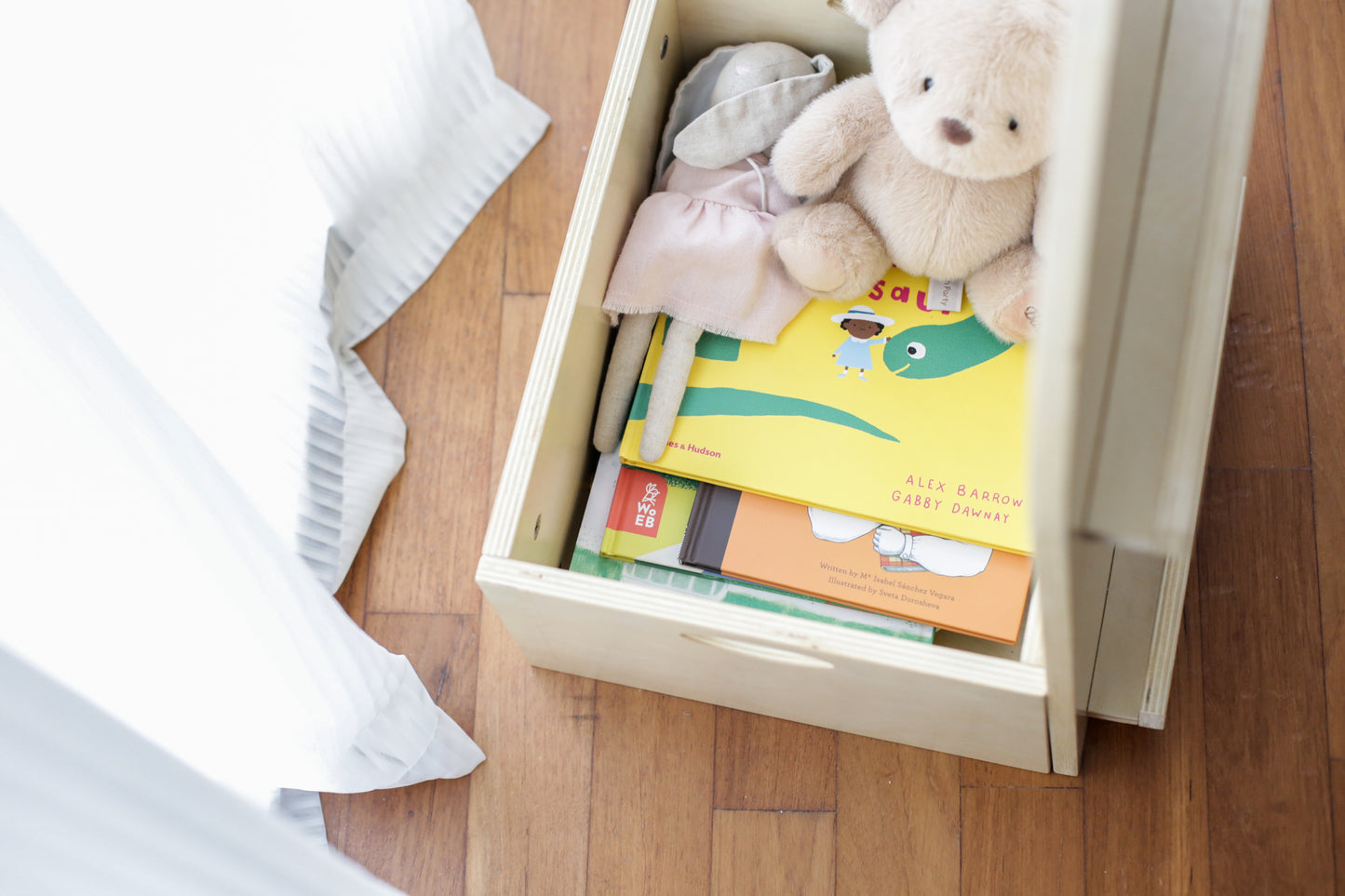
When toys consistently end up on the floor, the most likely reason is that there is no accessible, obvious place for the child to put them back. A single large toy box is particularly ineffective — everything gets buried, items become invisible, and children stop trying to retrieve or return anything. The cycle becomes: tip everything out to find one thing, leave it all on the floor, repeat.
What works instead: low, open shelving where individual items or categories of toy have a clear, visible home. A child who can see where something belongs is far more likely to return it there than one who is expected to sort through an opaque bin.

As with most things in a child's room, the Montessori-informed principle applies: if the storage is too high, too complicated, or too enclosed for the child to use independently, they simply won't use it. Child-height, accessible storage is the single most effective change most families can make to a child's room without changing any other piece of furniture.
3. Homework has moved to the dining table
This one is telling because children rarely move their work voluntarily. If homework consistently happens at the dining table rather than in the bedroom, it usually means the bedroom does not have a workable surface — or that the current desk does not actually support focused work.
A school-age child's room needs to serve three functions: sleep, play and study. When study gets displaced, it is worth asking whether the space was ever designed to accommodate it, or whether the furniture needs rethinking.
Before that, homework and creative work often happen at a small activity table or at the dining table as a family activity. As the school workload grows, a dedicated desk with proper storage for books and stationery becomes genuinely useful — not just a nice addition.
We covered the study space setup in full detail in our September guide. If your child's bedroom is missing a proper learning zone, the practical starting point is a height-adjustable desk and a supportive chair — both sized for the child now, with room to grow.
→ How to Create a Study Space That Helps Your Child Focus and Learn Independently
4. Their room doesn't support independence
Ask yourself honestly: how many times a day does your child need adult help to manage their own bedroom?
At the right developmental stage, a child should be able to:
- Choose and retrieve their own book
- Select and put on their clothes without assistance
- Find and return toys to their storage place
- Access stationery or art materials without asking
- Make or straighten their own bed
- Climb in and out of bed safely on their own
If the room's furniture prevents most of these — because shelves are too high, the wardrobe rail is out of reach, the toy storage requires adult help to open, or the bed is too elevated to climb into independently — the room is actively working against the child's developmental stage rather than with it.
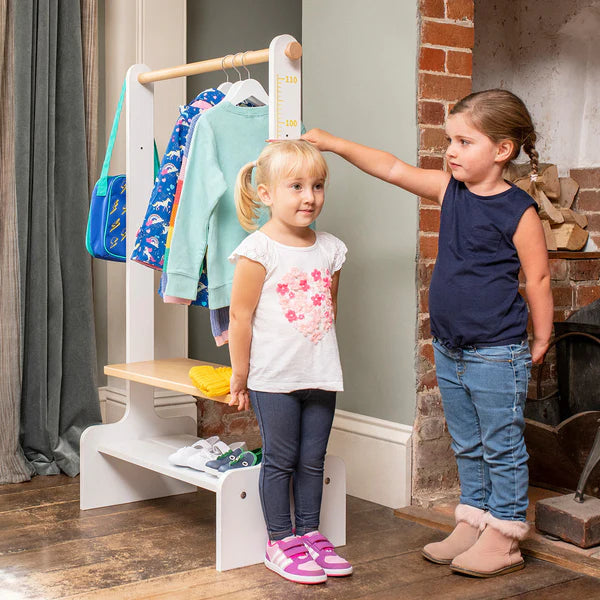
The goal is not expecting children to do everything themselves. It is ensuring that the environment makes independence the easy, natural choice — not a daily struggle that requires a stool, a stretch, or a request for help every time.
5. Two children are competing for the same floor space
In most Malaysian and Singaporean homes, siblings sharing a bedroom is the norm. The challenge is rarely the room size itself — it is how the available floor space is being used.
Two standard single beds placed side by side consume the majority of the floor space in a typical apartment bedroom, leaving very little room for storage, study or play. The practical solution is to use vertical space: a bunk bed puts two sleeping spaces on the same footprint as one, and the recovered floor area can be given over to everything else the room needs to do.
Are bunk beds suitable for a small shared children's bedroom?
Yes — with the appropriate safety considerations in place. The top bunk is generally recommended for children aged 6 and above. Adequate guardrails should be present on all open sides. A stable ladder or staircase, sufficient ceiling clearance of at least 90 to 100 cm between the top mattress and the ceiling, and a mattress that does not exceed the manufacturer's recommended thickness are all important. Bunk beds with built-in storage stairs are particularly practical for compact rooms — they combine the sleeping solution with drawer storage in a single footprint.
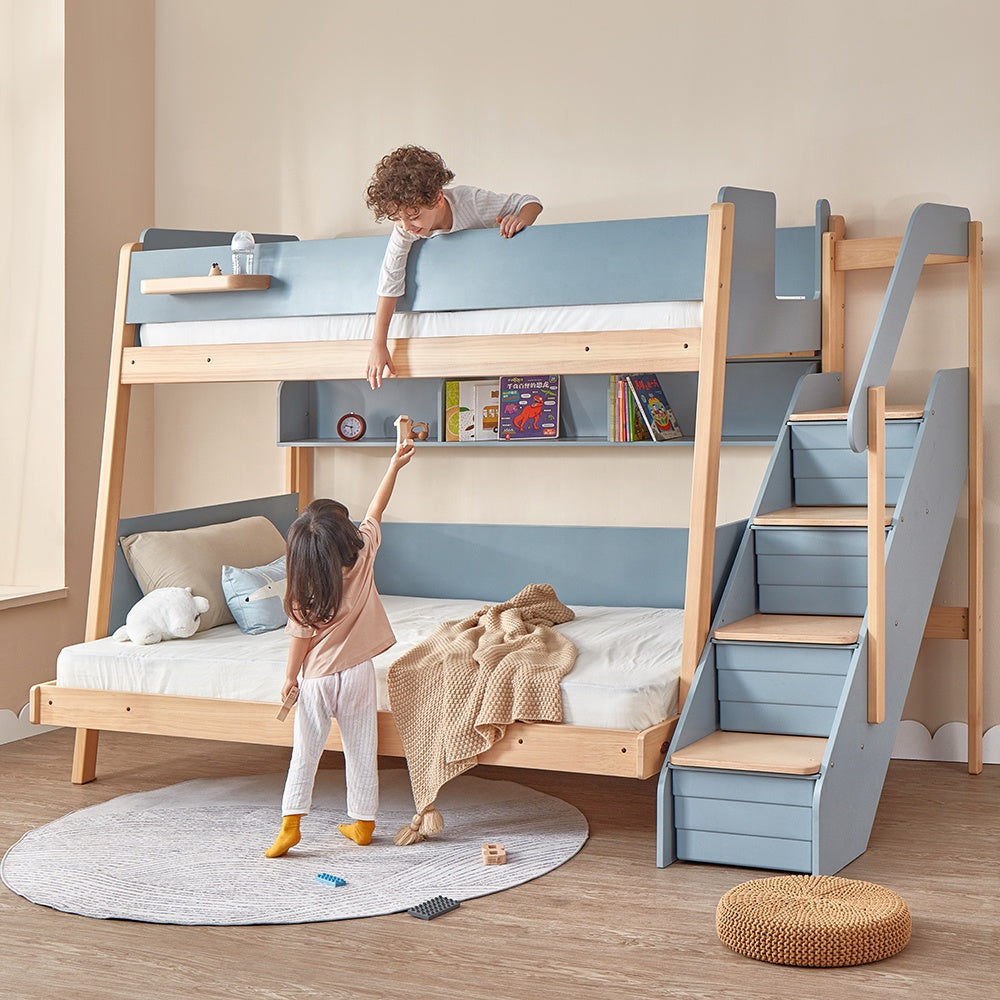
In a shared room, each bunk becomes a distinct territory — particularly the top bunk, which many children treasure for its elevation and sense of privacy. Defining each child's personal area reduces conflict and gives each of them genuine ownership over part of the room.
6. The room has more furniture but less usable space
This is perhaps the most common pattern in children's bedrooms — and the easiest to misread as a space problem when it is actually a furniture selection problem.
Parents add a bookshelf when books start accumulating. Then a second storage unit when the first fills up. Then a small desk when homework starts. Then a toy chest for the overflow. The room now contains six pieces of furniture, feels cramped, and still does not work as well as it did with less.
The problem is rarely too little storage. It is the accumulation of single-purpose pieces that each solve one problem while collectively consuming the floor space that made the room functional.
| Instead of | Consider | What it saves |
|---|---|---|
| Single bed + separate storage unit | Bed with integrated under-bed drawers | The full footprint of a standalone chest of drawers |
| Two single beds side by side | Bunk bed | The footprint of one complete bed — reclaimed as floor space |
| Loft bed + separate desk alongside | Loft bed with desk positioned beneath | The desk footprint — it slots under the raised sleeping area |
| Multiple fixed shelving units | Modular storage system | Future replacement cost — reconfigures as needs evolve |
| Toy cabinet + separate bookshelf | Combined open storage unit with defined sections | One footprint instead of two — more wall space preserved |
The principle is straightforward: buy according to function needed, not by number of problems to solve. A room with three well-chosen, multi-purpose pieces will feel more spacious and work more effectively than one with six pieces that each solve only one thing.

7. T![]() heir room still feels like it belongs to a much younger child
A preschooler's room is optimised around one set of needs: safe sleep, floor-level play, toy storage and simple daily routines. It works beautifully for a three-year-old. By age seven or eight, those same priorities have shifted considerably — and a room that hasn't evolved with them starts to feel like a mismatch between the space and the child living in it.
A primary-school child's room increasingly needs to accommodate:
- A proper sleep surface — longer, firmer, without infant-style guardrails
- A study zone for homework and creative projects
- Storage for school materials, books and hobby equipment
- Some private space — a reading corner or defined area that feels genuinely theirs
- Room for friends occasionally
The room doesn't need a complete overhaul. But it does need to be reassessed against what the child's life actually looks like now — not what it looked like two or three years ago when the furniture was last chosen.
This is why adjustable and modular furniture is worth the investment at the outset. A desk that grows with the child, storage that can be reconfigured, and a bed that transitions through stages all mean the room evolves without the full cost and disruption of starting over.
What furniture to prioritise when updating a kids' room
When it is time to make changes, a need-based framework is more useful than an aesthetics-first approach. Work through the room's core functions in order:
Sleep first
Start with an age-appropriate bed. Everything else in the room is secondary to good, safe, comfortable sleep. See Suteki's Sleep Collection for beds across all stages.
Then storage
Give everyday belongings clear, accessible homes. Child-height, open storage the child can manage independently is the goal — not more closed cupboards.
Then study
Add a proper desk and chair when learning becomes part of the room's daily function — typically from school age onwards. See the Learn Collection for adjustable options.
Then play
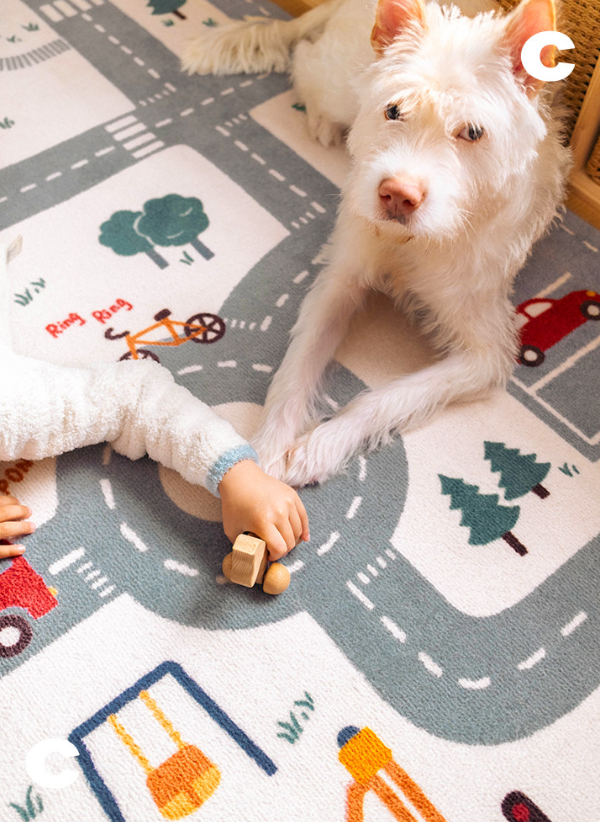
Protect some open floor space. The most useful play surface in most children's rooms is a clear floor with a rug — not another piece of play furniture.
Within each category, the question to ask is: can I choose one piece that performs more than one function? A bed with under-bed storage, a loft bed with a study zone beneath, a bookshelf that also divides the room — these choices compound across the lifespan of the furniture and the child's time in that room.
Frequently asked questions
What furniture does a kids' bedroom actually need?
A children's bedroom needs to serve four core functions: sleeping, storing belongings, learning and playing. A toddler's room needs a safe low bed, accessible storage and a small table for play. A school-age child's room additionally needs a proper desk and chair. The key principle is choosing pieces that serve multiple functions — a bunk bed with storage stairs, a loft bed with a desk beneath, or modular shelving that reconfigures as needs change.
How can I make a small kids' bedroom more functional?
Use vertical space rather than floor space — a bunk bed or loft bed frees up significant floor area compared to a standard single bed. Choose furniture that performs more than one function: beds with integrated storage, desks with shelving, modular storage that can be reconfigured. Keep only age-appropriate furniture in the room. Child-height, open storage for toys and books reduces visual clutter and makes the space easier for the child to manage independently.
When should I replace my child's bed?
Look for practical signals rather than a specific age: the child's feet regularly reach the end of the mattress, they struggle to climb in or out comfortably, or they are frequently waking from disrupted sleep. The transition from a cot to a single bed typically happens between ages 2 and 3. From a single bed to a longer or wider bed is often prompted by a growth spurt between ages 7 and 10. Safety considerations — such as reviewing guardrails as the child develops — should also be reassessed at each transition.
Are bunk beds suitable for siblings sharing a small room?
Yes — bunk beds are one of the most effective space-saving solutions for shared children's bedrooms. By stacking two sleeping spaces vertically, they free up significant floor area for storage, study and play. Safety considerations include: the top bunk is generally recommended for children aged 6 and above, guardrails on all open sides, a stable ladder or staircase, and sufficient ceiling clearance of at least 90 to 100 cm between the top mattress surface and the ceiling. Bunk beds with built-in storage stairs are particularly practical for compact rooms.
How can children's furniture last longer as they grow?
Choose adjustable and modular furniture designed to adapt across developmental stages. Height-adjustable desks — such as the Boori Ergonomic Desk, which adjusts from 52 to 78 cm — serve children from early childhood through to secondary school. Bunk beds that can be separated into two individual single beds extend the purchase's useful life. Modular storage systems can be reconfigured as needs evolve. Solid-timber construction also means furniture holds up through years of daily use without structural degradation.