

Your child sits down to do their homework. Five minutes later, they are looking for a pencil. Then they need another book. Then something across the room catches their attention and the work sits untouched.
It is tempting to attribute this entirely to concentration or discipline. But the environment around a child influences how easily they settle into a task — often more than parents realise.
A thoughtfully arranged kids' study space gives children a clear place for reading, drawing, homework and independent activities, with the things they need within arm's reach and the things that distract them out of view. This guide walks through seven practical ways to set one up — and explains why each one matters.
What makes a good study space for a child?
A good children's study space should be comfortable, organised and easy for the child to use independently. Start with a desk and chair suited to their height, keep frequently used learning materials within reach, reduce unnecessary distractions and provide simple storage so everything has a clear place.
- A desk suited to the child's height
- A supportive chair with feet properly supported
- Good natural or task lighting
- Easy-to-reach books and stationery
- Enough storage to keep the work surface clear
- A consistent place for reading and focused activities
Does a dedicated study space help children focus?
A dedicated study space can make routines easier by giving children a consistent environment associated with reading, homework and focused activities. Over time, sitting at the desk becomes a cue in itself — the physical transition into the space begins to signal that it is time to work.
The goal is not creating a miniature office. For younger children especially, the space should feel accessible and familiar — sized for them, stocked with what they need, and free of the objects that typically pull their attention elsewhere.
Children who have a specific place for learning tend to settle into work more quickly than those who move between the sofa, the dining table and the bedroom floor. Consistency in location supports consistency in routine.
This is also where Montessori principles offer something practical: an environment designed around the child's independence — where they can retrieve a book, sharpen a pencil, or start an activity without adult assistance — produces more self-directed learning than one where every small need requires a request.
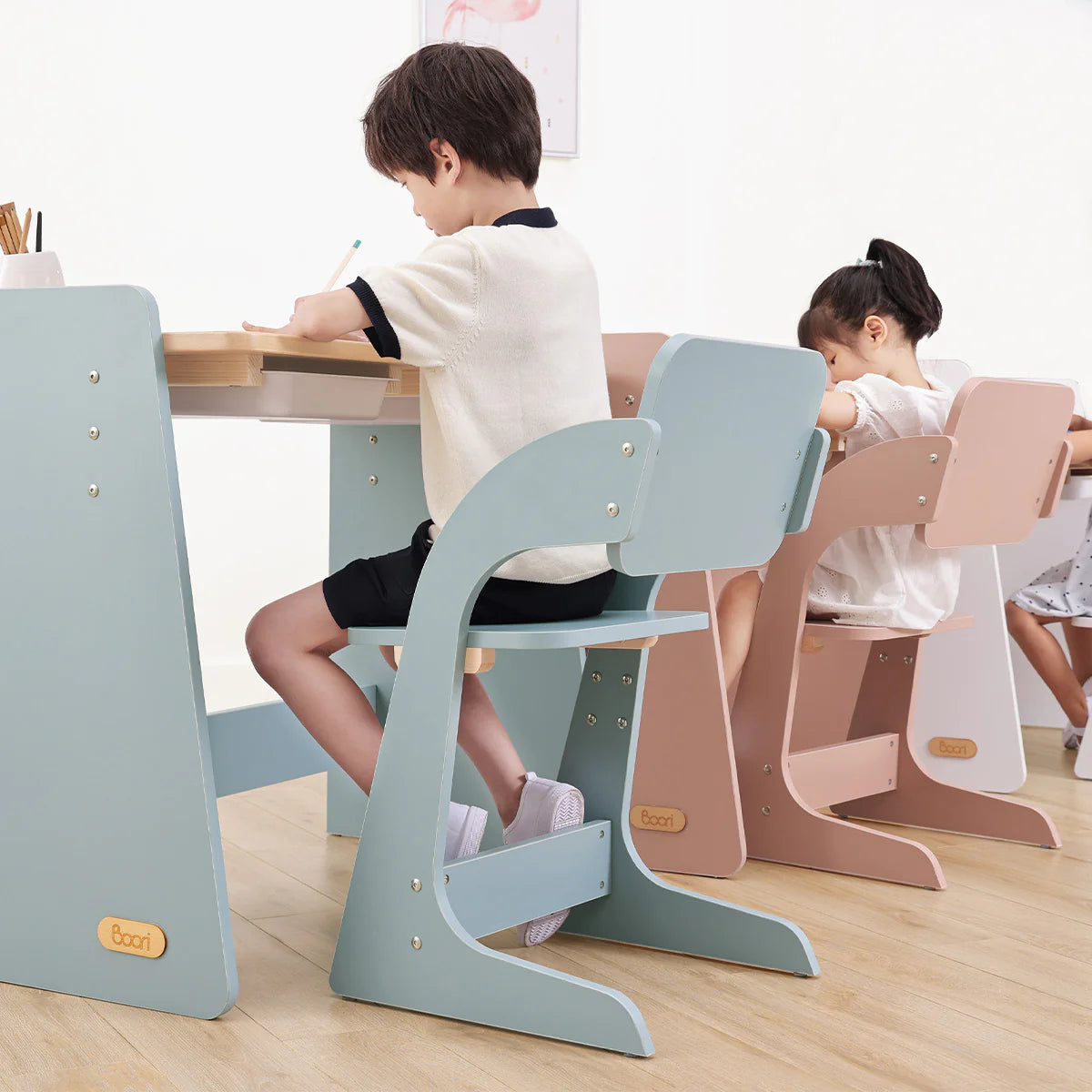
1. Choose a desk that fits your child, not just your room
The most common mistake in setting up a kids' study area is choosing a desk sized for the room rather than the child. An adult desk — or even a standard children's desk that is not height-adjustable — forces a child to work in positions that cause discomfort and early fatigue: shoulders raised, arms reaching forward, back unsupported.
When seated at the correct desk height, the child should be able to rest their elbows comfortably on the surface with their forearms roughly parallel to the floor and their shoulders relaxed. The desk should not feel like a climb.
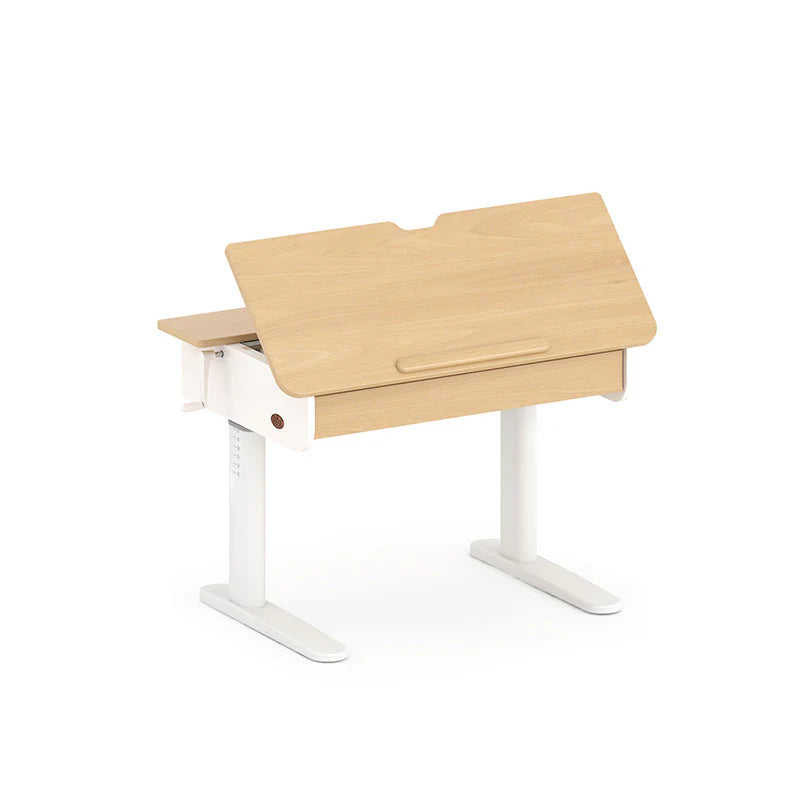
An adjustable ergonomic desk for children removes the need to replace the desk every two to three years as your child grows. A desk that fits at age four, adjusted correctly, can still fit at age twelve — without the child developing the posture habits that come from years of reaching upward or hunching down to a surface that is too low.
The tilting desktop function, found on the Boori Ergonomic Desk, is also worth noting. Angling the writing surface slightly toward the child reduces neck flexion during drawing and reading — particularly relevant for younger children who tend to lean forward heavily when concentrating.
2. Make sure their feet are supported
Parents frequently prioritise the desk and treat the chair as an afterthought. In practice, the chair is equally important — and the issue that is most commonly overlooked is foot support.
When a child's feet dangle freely, the body naturally compensates by shifting weight onto the thighs and lower back. This creates discomfort within minutes and makes sustained seated concentration significantly harder, particularly for children under eight. The feet should rest flat — on the floor, on a footrest, or on the chair's own adjustable support.

A well-fitted ergonomic study chair for children adjusts both the seat height and the backrest position to fit the child's current proportions. The sit-brake castor wheels on the Boori Ergonomic Study Chair are a useful design detail: the chair rolls freely when the child is not seated — easy to pull out and push in — but locks when weight is applied, keeping the workspace stable during use.
A height-adjustable desk paired with a height-adjustable chair gives you a system you can dial in precisely as your child grows, rather than a mismatch that requires compromise at one end or the other.
3. Reduce what competes for their attention
A child's study space does not need to be empty. It needs to make the next task obvious.
When the desk surface is cluttered with items unrelated to the current activity — yesterday's craft project, a toy that migrated across the room, a stack of unrelated books — the child's attention is divided before they have even begun. The setup of the space itself is competing with the work.
A few practical adjustments make a meaningful difference:
- Keep only the materials for the current task on the desktop surface
- Store stationery in a drawer or caddy rather than scattered across the desk
- Position the desk with its back to the room's main play area where possible
- If the study space is in a shared bedroom, use a low shelf or furniture arrangement to visually separate the study zone from the sleep and play zones
- Avoid placing screens within the child's direct sightline from the desk
None of these require structural changes to the room. They are organisational decisions that reduce the number of things competing for the child's attention during the time they have set aside for focused work.

Pictured is Pupupula No. 1 Study Desk. Shop Here →
4. Put books and learning materials within reach
A child who has to ask for a book, search for a pencil or wait for an adult to retrieve their reading materials will find reasons not to start. Access is the prerequisite for independence.
Books and learning materials should be on low, open shelving the child can reach and navigate without help. For younger children, a forward-facing bookshelf — where covers rather than spines are visible — makes book selection genuinely self-directed. For older children, accessible shelving at or near the desk keeps reference books, workbooks and reading materials within reach during homework sessions.
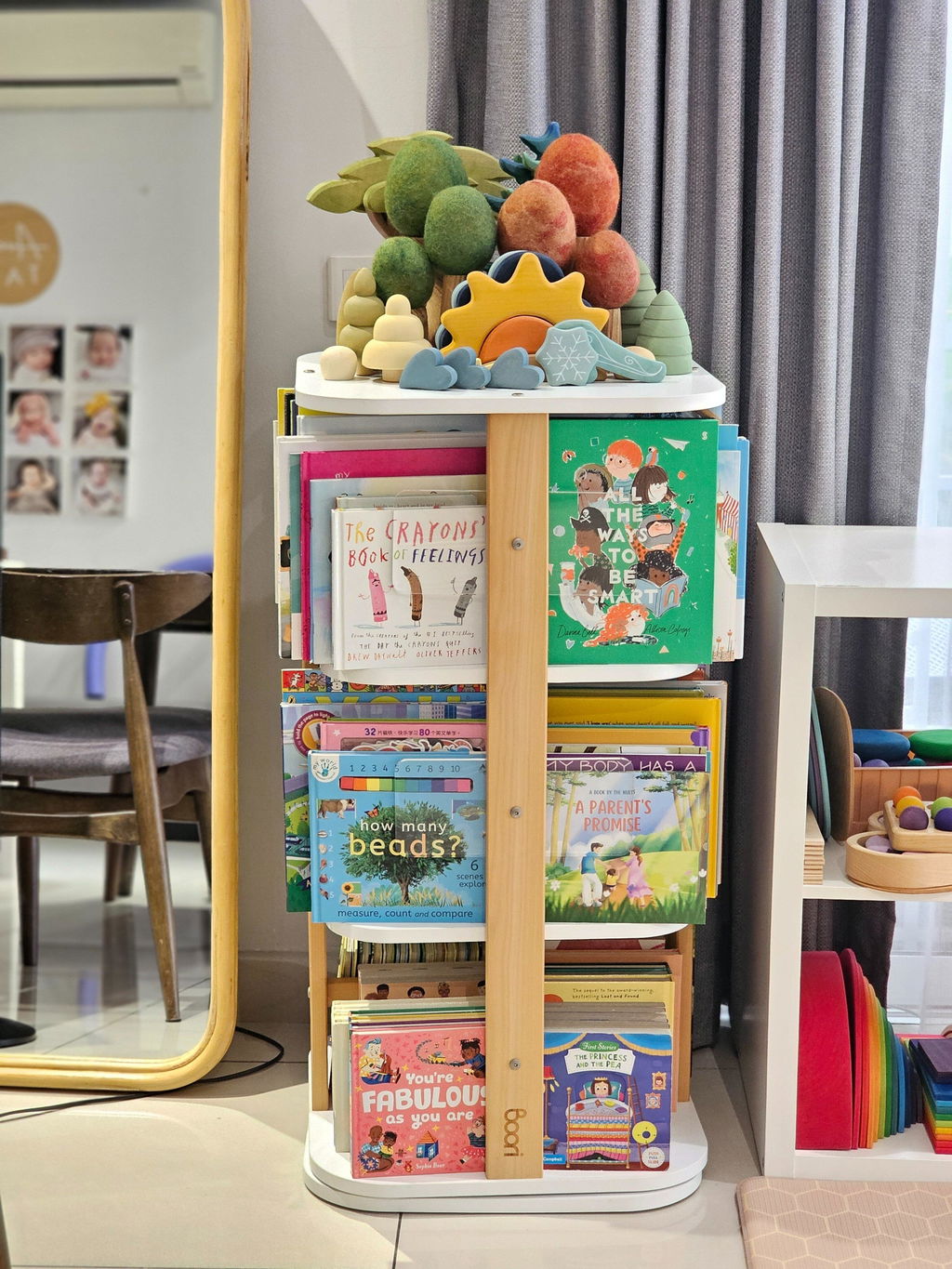
The same principle extends to stationery. A small caddy or open container with pencils, crayons and scissors on the desk surface — or in a shallow drawer the child can open independently — removes the need to ask for materials at the start of every activity. The fewer the friction points between the child and starting their work, the more likely they are to begin without prompting.
5. Give everything a home
The desk looked organised when you set it up. Two weeks later it has become another storage surface.
This is not a discipline problem. It is a systems problem. When objects do not have a designated place, they accumulate wherever there is space — and the desk, being the most accessible flat surface in the study zone, fills up first.
The solution is deliberate assignment rather than general tidying. Every category of item in the study space should have one specific location:
| Item category | Recommended home | Why it works |
|---|---|---|
| Everyday stationery | Desk drawer or caddy | On the desk but contained — visible, accessible, not scattered |
| Current schoolbooks | Desktop shelf or pegboard hutch | Upright and accessible — no searching, no stacking |
| Reading books | Low bookshelf near the desk | Within reach without leaving the study zone |
| Art and craft materials | Separate labelled storage — not on the desk | Out of sight when not needed, retrieved intentionally |
| Completed work | Named tray or folder | Separated from in-progress work — gives a sense of completion |
| Devices and chargers | Designated spot away from the desk surface | Reduces temptation during focused work time |
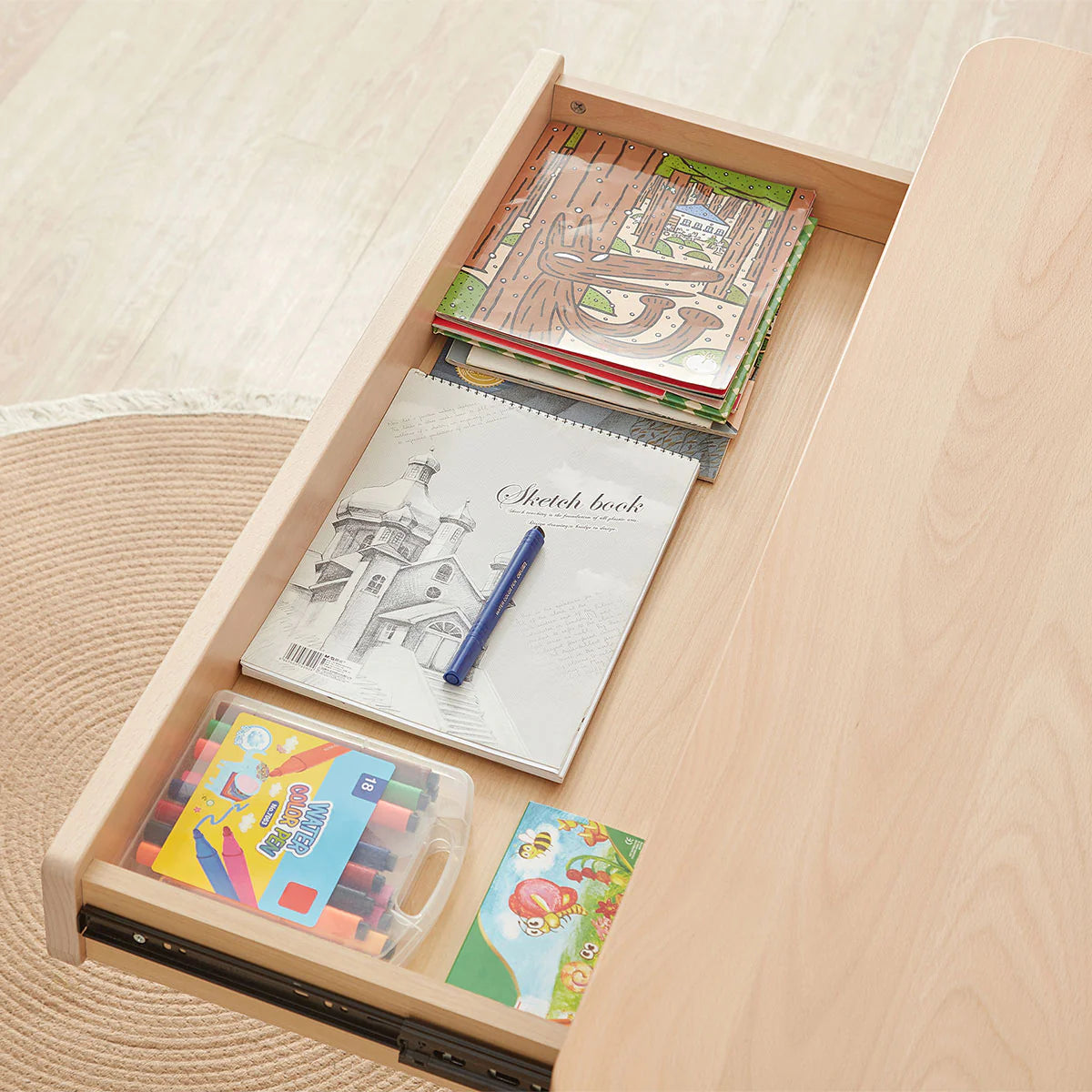
The Boori Ergonomic Desk's integrated drawer is a practical starting point for stationery storage. The optional pegboard bookshelf hutch adds vertical storage above the desk surface — keeping books and materials within reach without consuming the work area below.
6. Create different zones for different ways of learning
Children do not learn in one mode. Homework requires concentration and writing. Reading requires a comfortable, relaxed position. Drawing requires space to spread out. Building or constructing requires floor space. Expecting all of this to happen at a single desk produces a room that does not quite serve any of them well.
Even in a compact room, defining two or three distinct zones makes a meaningful difference:
Study zone
The desk and chair — for writing, homework, drawing and any screen-based learning. This is the zone associated with focused, seated work. Keep it clear and uncluttered.
Reading zone
A comfortable floor cushion, bean bag or low chair with accessible books nearby. Reading does not require a desk, and children often read more when they have a distinct, cosy spot associated with it. A low bookshelf beside a reading nook is one of the highest-return additions to a children's learning space.
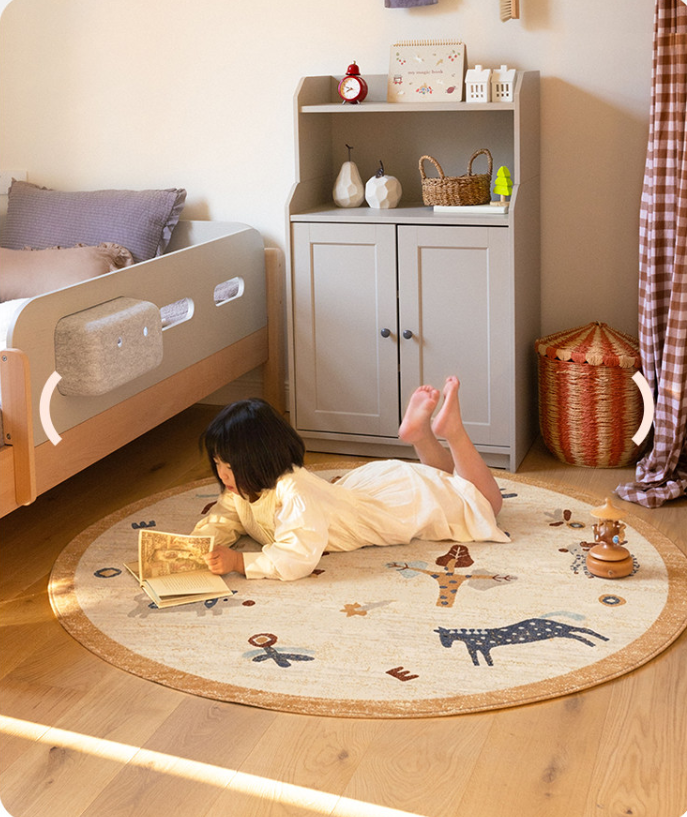
Pictured is Suteki Safari Paradise Machine Washable Rug. Shop Here →
Creative zone
A floor space or low table for building, art, puzzles and open-ended activities. Keeping this zone separate from the study desk helps children distinguish between focused homework time and free creative exploration — both valuable, but different.
In a Malaysian apartment bedroom, a desk in one corner, a floor cushion and low bookshelf in another, and a small rug defining the play area are enough to create three meaningfully distinct zones. The division is functional, not architectural.
7. Let the study space grow with your child
A study space set up for a five-year-old will not serve a ten-year-old without adjustment. The school bags get bigger, the books get heavier, the homework gets longer, the need for a proper writing surface becomes more pressing. The question is whether the furniture can adapt to those changes or whether it needs replacing.
The case for investing in adjustable, quality children's study furniture is straightforward: furniture that adapts across developmental stages is purchased once rather than several times. The Boori Ergonomic Desk adjusts from 52 cm to 78 cm — a range that comfortably spans early childhood through secondary school age, approximately two to fourteen years. That is a single purchase serving potentially twelve years of learning.
| Age stage | Study space priority | What adjusts |
|---|---|---|
| 2 – 5 years | Drawing, colouring, early reading, play-based learning | Desk at lowest height setting; tilt desktop for drawing activities |
| 6 – 9 years | Homework, writing, reading, creative projects | Raise desk height as child grows; add bookshelf storage for school materials |
| 10 – 14 years | Structured homework, exam revision, extended reading | Desk at upper height settings; chair at full seat height; additional storage for books and materials |
The investment case is also about something less tangible: a study space that grows with a child becomes associated with learning across their entire childhood. It does not feel like a starter piece or a temporary solution. It becomes the place where they do their work, year after year — and that consistency has its own quiet value.

Pictured is Boori Tidy Table V23 With Two Chairs Package. Shop Here →
Creating a learning space that encourages independence
The most effective thing a study space can do is make independent learning the path of least resistance. When the desk fits, the chair supports, the books are accessible, the stationery is within reach and the system for putting things away is simple enough to actually use — children work with less friction, less prompting, and more ownership over what they produce.
None of this requires an elaborate setup. It requires attention to the child's scale, their habits, and the specific ways their current environment is working against them rather than for them. The changes are often smaller than expected. The results, over months and years, are not.
Frequently asked questions
What makes a good study space for a child?
A good children's study space should be comfortable, organised and easy for the child to use independently. Start with a kids' study desk and chair suited to their height, keep frequently used learning materials within reach, reduce unnecessary distractions and provide simple storage so everything has a clear place. Key elements include a desk at the right height, a supportive chair with feet properly supported, good lighting, accessible books and stationery, enough storage to keep the work surface clear, and a consistent location.
Where should I put my child's study desk?
Position it somewhere with good lighting and relatively few distractions. A child's bedroom, family study area or quiet corner of the living room can all work. The most important factor is creating a consistent place the child recognises as their learning area — a location they return to each day for reading, homework and focused activities.
What height should a kids' study desk be?
The appropriate height depends on the child's size rather than age alone. When seated, the child should be able to work comfortably with elbows roughly level with the desk surface and shoulders relaxed. Adjustable desks are the most practical solution because they can be reconfigured as the child grows. The Boori Ergonomic Desk adjusts from 52 cm to 78 cm via a detachable wind-up crank, and is recommended for children approximately aged 2 to 14.
Is an ergonomic desk necessary for children?
It is not compulsory, but an adjustable ergonomic desk makes it significantly easier to fit the workspace to a growing child's body. A desk that is too high causes raised shoulders and poor posture; one that is too low causes hunching. Adjustable furniture eliminates the need to replace the desk every few years and supports comfortable sitting throughout reading, drawing and homework sessions.
How do I create a Montessori study space at home?
Keep furniture and learning materials accessible to the child independently — books on low shelves, stationery within reach, surfaces at the child's height. Provide clear, designated places for belongings and avoid overcrowding the area. The aim is an environment where children can begin and complete learning activities with less adult assistance, building the habit of independent work through the design of the space itself.
How can I keep my child's study desk organised?
Limit what stays permanently on the desktop, give stationery and books designated storage areas and encourage children to return materials after each activity. Child-accessible drawers, open shelves and pegboards make this routine easier. The Boori Ergonomic Desk includes an integrated storage drawer beneath the desktop and is compatible with an optional pegboard bookshelf hutch for additional organisation above the work surface.