

Bunk beds are one of the most practical investments a Malaysian family can make, especially in condos and apartments where floor space is precious. But before you buy, two questions come up every time: Is my child old enough? And is this children's bed actually safe?
This guide answers both. We cover the recommended age guidelines from international safety standards, the key signs of readiness to look for in your child, and a seven-point safety checklist to run through before purchasing any bunk bed in Malaysia.
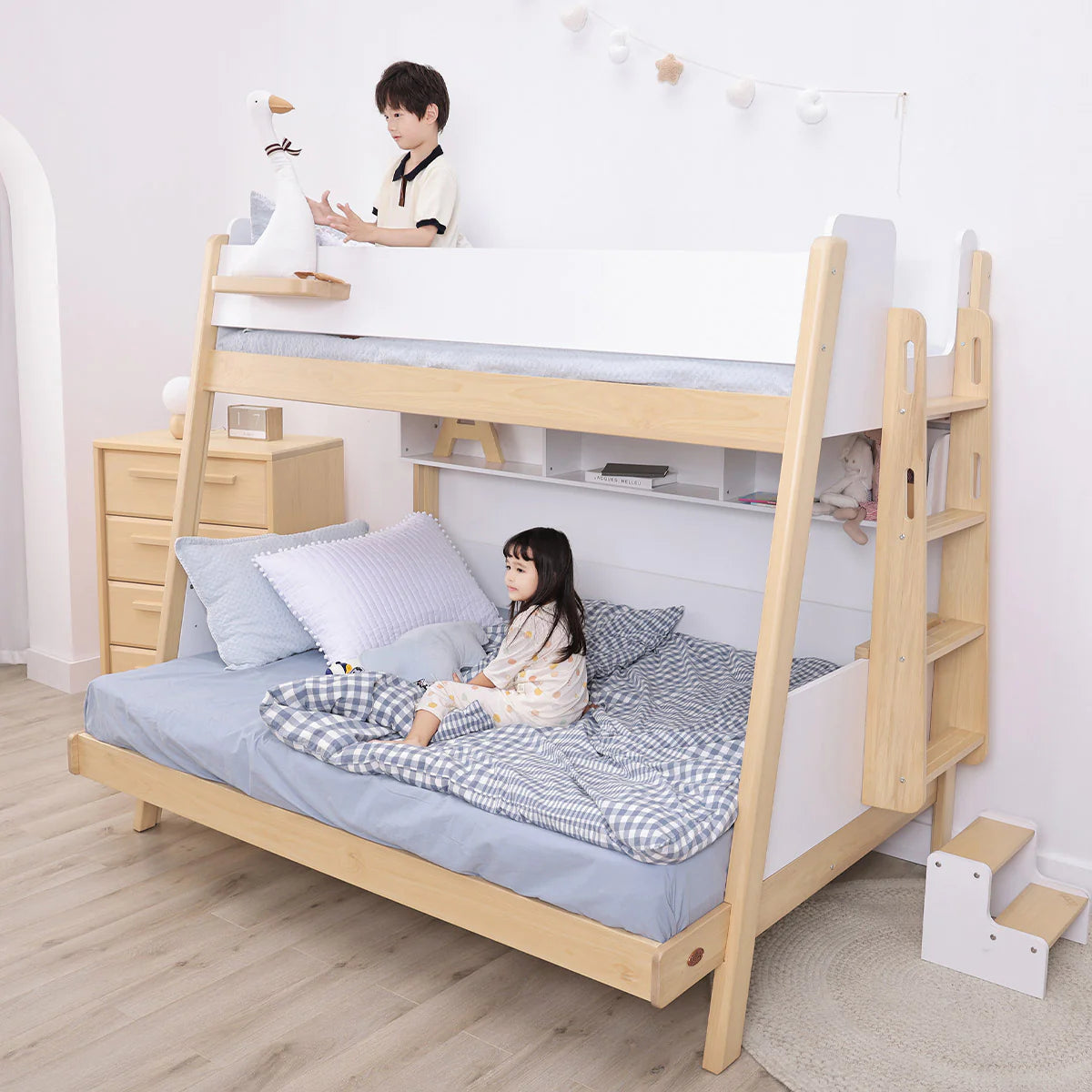
What age is safe for a bunk bed in Malaysia?
The short answer: most children are ready for a bunk bed from age 6. Children under 6 are generally not recommended for the top bunk.
Two internationally recognised safety standards offer specific guidance:
- EN 747-1,2:2012+A1:2015 (European Safety Standard) — recommends bunk and loft beds are not used by children under 6 years old due to the risk of falls.
- AS/NZS 4220:2010 (Australian/New Zealand Standard) — takes a more conservative approach, recommending children under 9 should not sleep on the top bunk.
Malaysia does not yet have a specific national standard for bunk beds. However, reputable brands sold here, including Boori available at Suteki, are manufactured to EN 747 or AS/NZS 4220 standards, giving you independent assurance of structural safety.
Age summary at a glance
| Age | Top bunk | Bottom bunk |
|---|---|---|
| Under 6 | Not recommended | Generally fine with guardrail |
| 6–8 years | Safe with supervision | Safe |
| 9+ years | Safe | Safe |
| Teenagers | Safe (check weight rating) | Safe |
Age isn't everything — signs your child is ready
The age guidelines are a starting point, but every child develops differently. Look for these readiness signals before putting your child on the top bunk of a children's bunk bed:
- They can climb up and down a ladder confidently without help
- They understand and follow simple safety rules (for example, no jumping on the top bunk)
- They sleep relatively still and do not roll around excessively
- They are not sleepwalkers, as sleepwalking children face a higher fall risk on elevated loft beds and bunk beds
- They are not afraid of heights or enclosed spaces
If your child is 6 but not yet showing these signs, it is perfectly reasonable to keep them on the bottom bunk for another year or two.
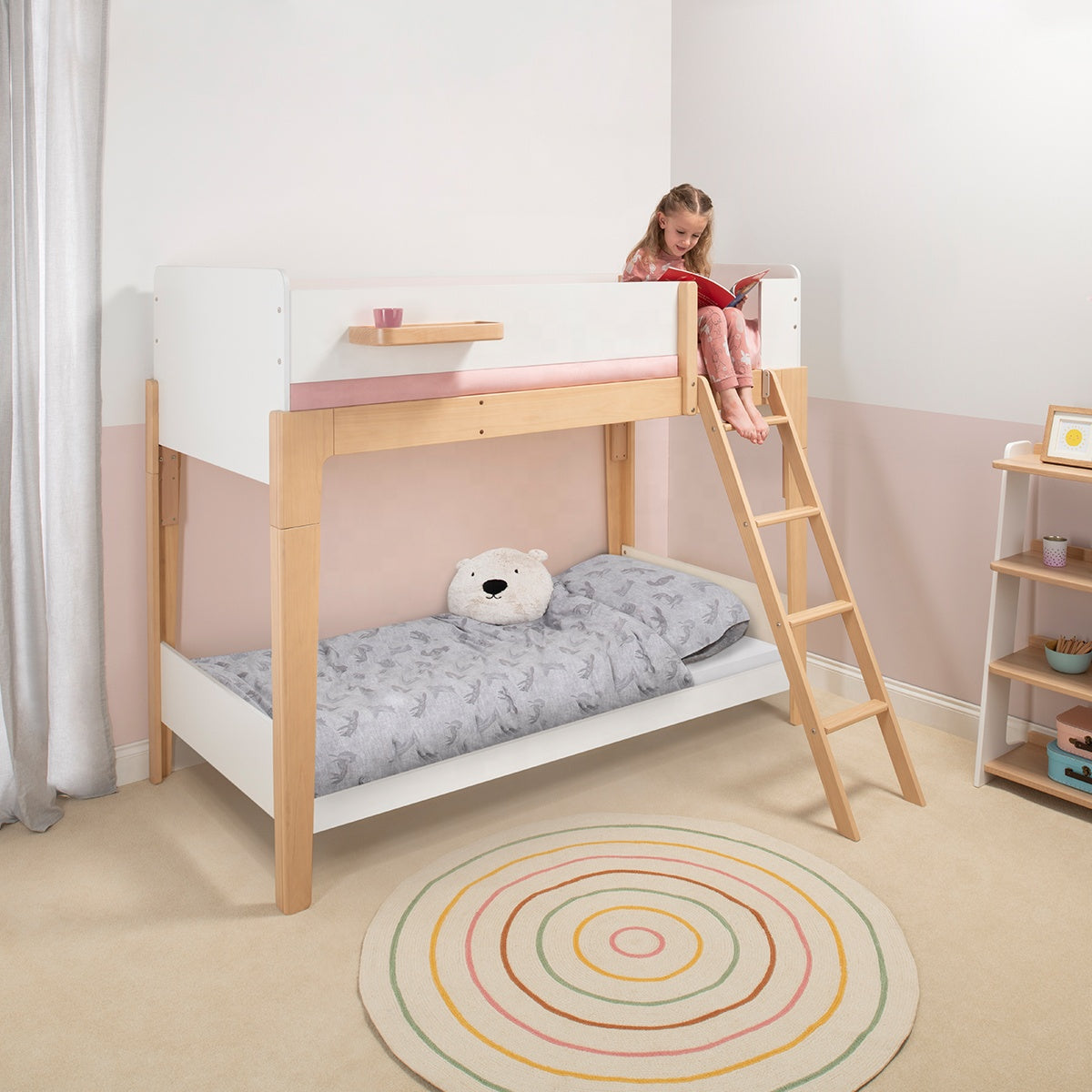
7 safety checks before buying a bunk bed in Malaysia
Not all bunk beds are created equal. Here are the seven things to verify, whether you are buying online or in-store.
| Safety Feature | What to Look For | Why It Matters |
|---|---|---|
| Guardrails | All four sides on top bunk, height ≥16cm above mattress | Prevents rolling off during sleep |
| Ladder or staircase | Stable, evenly spaced rungs or storage stairs with grip | Reduces risk of slipping when climbing |
| Frame material | Solid wood (beech, pine) or heavy-gauge steel, no sharp edges | Durability and impact safety |
| Safety certifications | EN 747-1,2 (Europe) or AS/NZS 4220 (Australia/NZ) | Independently verified structural standards |
| Mattress fit | Gap between mattress and guardrail ≤7.5cm; max thickness noted | Prevents entrapment between rail and mattress |
| Finish and paint | Low-VOC or non-toxic paint, important in humid climates | Air quality and child health |
| Weight rating | Each bunk rated for ≥80–100kg static load | Long-term structural integrity as children grow |
Guardrails on all four sides
Guardrails on only two or three sides are a common cut corner on cheaper beds. Look for rails that cover all four sides of the top bunk, or at minimum both the wall-facing side and the open side. The rail should sit at least 16cm above the compressed mattress surface.
A stable, grip-friendly ladder or staircase
Most accidents happen during climbing, not sleeping. Check that the ladder rungs are evenly spaced, non-slip, and wide enough for a child's foot. If budget allows, a storage staircase (like the one on Suteki's Matilda Maxi bunk bed) is safer than a vertical ladder because it gives children a natural stepping motion.
Solid, splinter-free materials
Run your hand along all edges before purchasing. Look for rounded corners and smooth surfaces. Quality children's beds use solid hardwood (European beech or pine are common) or heavy-gauge powder-coated steel. Avoid beds with MDF-only construction for the main frame, as MDF weakens over time, particularly in Malaysia's humid climate.
Recognised safety certification
Ask the retailer which safety standard the bunk bed is certified to. EN 747 and AS/NZS 4220 are both credible. If a seller cannot provide this information, treat it as a red flag. Certification means the bed has been independently tested for structural load, entrapment hazards, and guardrail strength.
Correct mattress fit — check the gap
There should be no more than 7.5cm between the mattress edge and the guardrail. A gap larger than this creates an entrapment risk. Also check the retailer's maximum mattress thickness recommendation, as using a mattress that is too thick raises your child closer to the rail height, reducing its protective function.
Low-VOC or non-toxic finish
This is especially relevant in Malaysia where rooms are often less ventilated due to air-conditioning. Some bunk beds, particularly lower-cost imports, use paints and lacquers with high volatile organic compound (VOC) levels. Look for beds with water-based, eco-friendly paint. Boori uses a food-grade paint finish across their range of children's beds.
Weight and load rating
Each bunk should be rated to hold at least 80–100kg. This matters more than it sounds: children grow quickly, and a bunk bed purchased for an 8-year-old may still be in use when they are 14. Suteki's Neat bunk bed is tested to carry 100kg static weight per bunk.
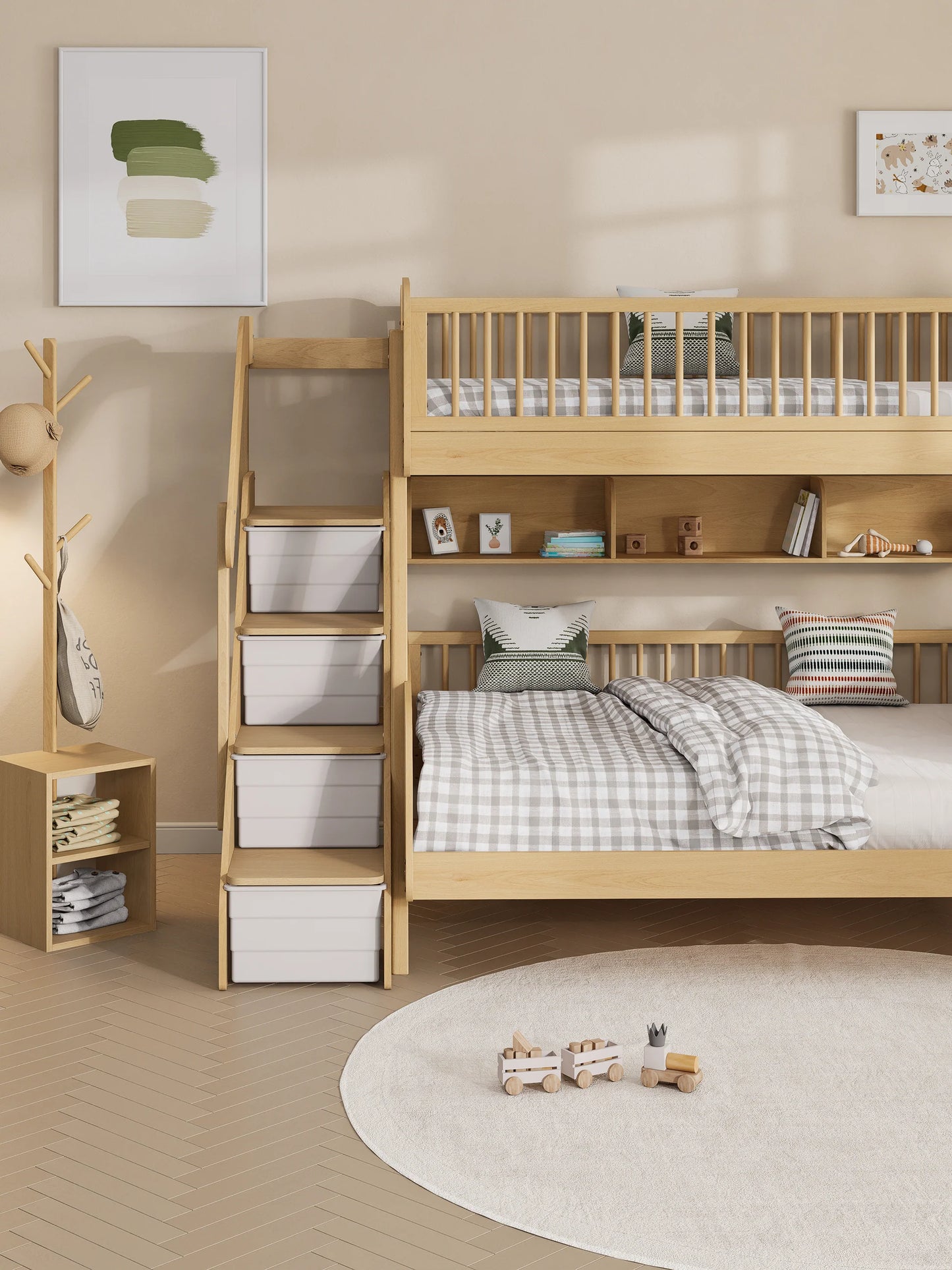
Extra considerations for Malaysian homes
Humidity and wood quality. Malaysia's tropical climate can cause cheaper woods to warp or expand over time. Solid beech or pine from certified sustainable sources (look for FSC certification) handles humidity better than engineered board products. All bunk beds at Suteki use FSC-certified timber.
Room height. Standard Malaysian apartment ceiling heights range from 2.7m to 3.0m. Most full bunk beds stand 150–165cm tall. Confirm your ceiling height before purchasing, as you want at least 75–90cm of clearance above the top bunk for your child to sit up comfortably.
Convertible beds for long-term value. If you are unsure about your children's needs as they grow, consider a convertible bunk bed that separates into two individual beds. This gives you flexibility without buying two separate frames later.
Loft beds as an alternative. Families with one child may prefer a loft bed, which elevates the sleeping area and frees up space below for a study desk or play area. Suteki carries a range of loft beds alongside their full bunk bed collection.
Frequently asked questions
Can a 4-year-old sleep on a bunk bed?
For the top bunk, no. Both EN 747 and AS/NZS 4220 recommend against children under 6 using the upper bunk of a bunk bed. A 4-year-old can use the bottom bunk safely, provided there is a guardrail to prevent rolling out.
How do I stop my child from falling out of the top bunk at night?
Choose a children's bed with full-length guardrails on both sides of the top bunk. Ensure the mattress does not exceed the manufacturer's recommended thickness. The gap between the mattress edge and the guardrail should be no more than 7.5cm. For restless sleepers, keep your child on the bottom bunk until they are older.
What is the safest bunk bed for a 6-year-old?
Look for a low-profile bunk bed with a staircase rather than a vertical ladder, full guardrails on all four sides, and certification to EN 747 or AS/NZS 4220. Suteki's Neat Single Bunk Bed meets all these criteria and is a popular choice for families in Malaysia and Singapore.
Are metal or wooden bunk beds safer for Malaysian homes?
Both can be safe if certified to the relevant standards. Solid wood children's beds tend to hold up better in Malaysia's humid tropical climate compared to powder-coated steel. The most important factor is the safety certification and build quality, not the material alone.
What safety standard should a bunk bed in Malaysia meet?
Where can I buy a safe bunk bed in Malaysia?
Suteki (mysuteki.com) carries a curated range of certified bunk beds, loft beds, and children's beds in Malaysia by Boori, all certified to EN 747 or AS/NZS 4220. Free delivery across Malaysia for orders above RM1,000.