

You walk into your child's room and it looks beautiful. Neutral tones, a tidy shelf, everything in its place. Then your four-year-old walks in, needs a toy from the top shelf, and immediately calls for you.
The room looks good. But it isn't working for your child.
Independence isn't just something children develop from personality or parenting style. It's something the environment either supports or quietly blocks. A room designed around a child's scale and capability can do more for their confidence than almost anything else — because it gives them the chance to practise independence a dozen times every single day.
This guide walks through the key principles behind designing children's furniture and room layouts that genuinely encourage independence — and the most common mistakes that prevent it.

Why the room itself matters
Maria Montessori observed something that still holds true today: children don't ask for help because they're lazy or incapable. They ask for help because the environment was designed for adults, not for them.
Think about the everyday moments in a child's room — waking up and climbing out of bed, choosing a book to read, picking up a toy, putting it away, sitting down to draw. When furniture and storage are designed at adult scale, every one of these small actions requires either a struggle or a parent's help.
Multiply that across a full day, and you end up with a child who is subtly trained to be dependent — not because of who they are, but because of where they live.
When a child can do something independently, they will. When the room makes it easy, independence becomes the default — not the exception.
The good news is that the solution isn't complicated. It comes down to five core principles, applied thoughtfully to the space you already have.
The 5 principles of an independent child's room
These aren't design trends. They are practical conditions that determine whether a child can manage their own environment or not.
| Principle | What it looks like | Why it matters |
|---|---|---|
| Furniture at the right height | Low bed, reachable shelves, child-height hooks | Removes the need to ask for help with daily tasks |
| Accessible books | Forward-facing book rack at sitting height | Turns reading into a child-initiated choice |
| Self-managed toy storage | Open shelves, labelled bins, no deep boxes | Makes tidying possible without adult involvement |
| Spaces that belong to them | Defined zones: sleep, play, read, create | Builds ownership and pride in their environment |
| Furniture that grows with them | Adjustable desks, convertible beds, modular storage | Supports independence at every developmental stage |
Furniture they can reach
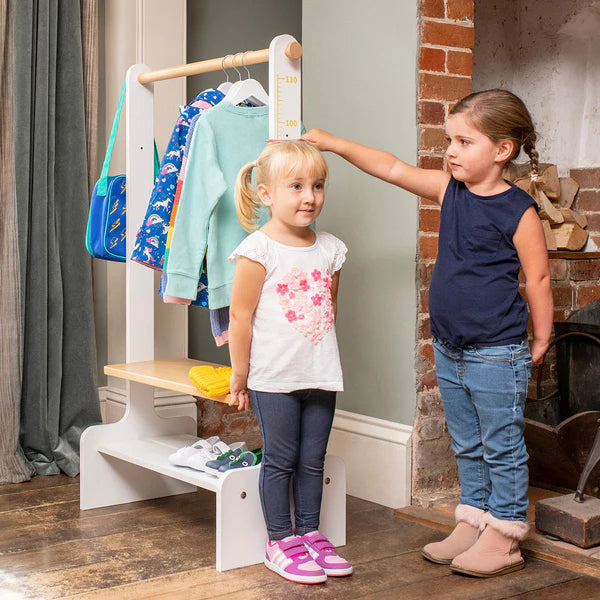
The single most important shift you can make is choosing children's furniture at the right height. Low-profile beds that a toddler can climb in and out of unaided. A wardrobe with a lower hanging rail. A desk and chair set at the child's actual sitting height. A coat hook by the door at shoulder level. These aren't just nice touches — they're the practical foundation for daily independence. When children can manage their own environment without constantly asking for a boost, they build real confidence.
Books they can access
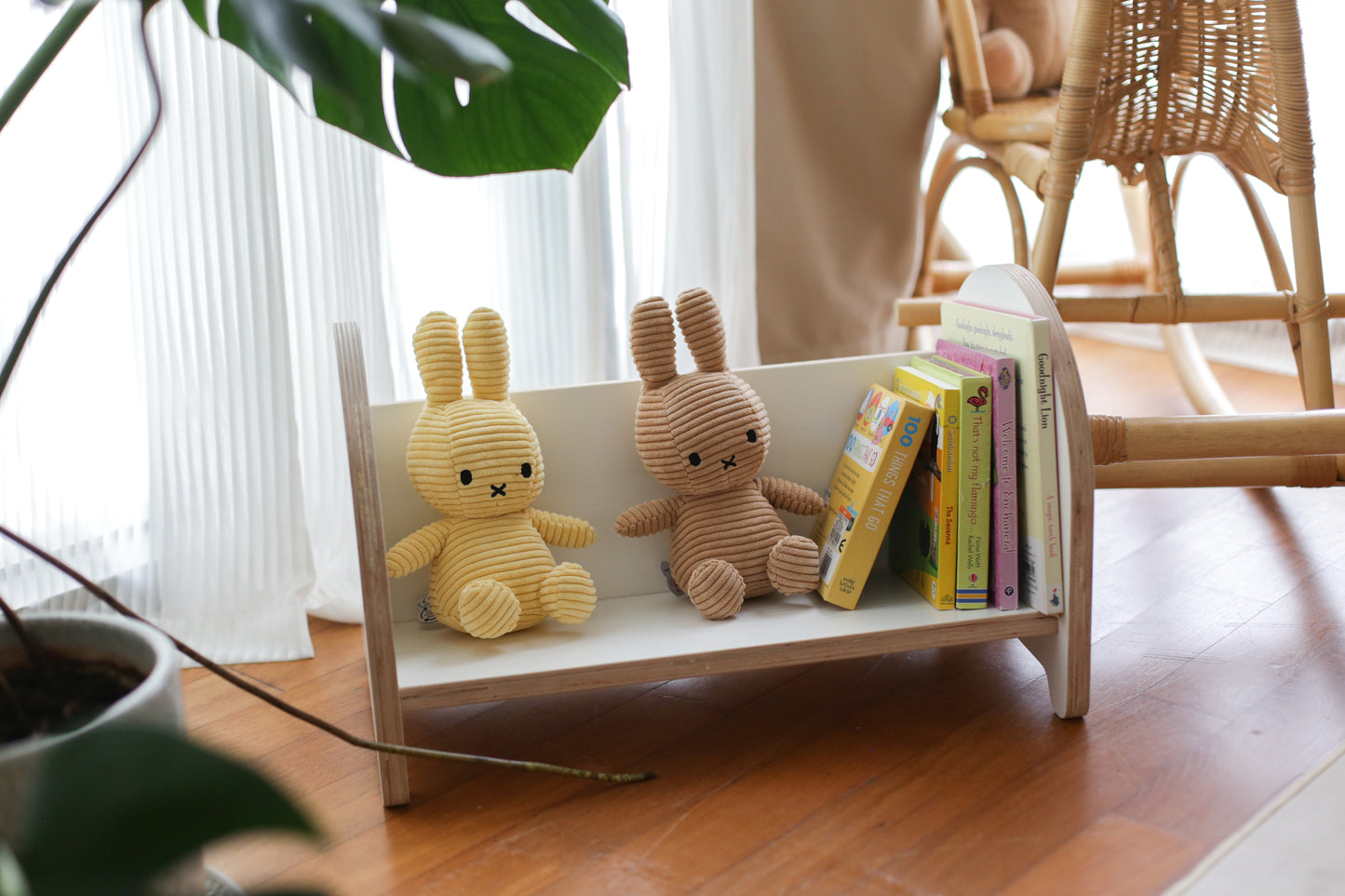
A child who can choose their own book will read more. Forward-facing bookshelves — where covers are visible rather than spines — are particularly effective with younger children who aren't yet reading titles fluently. A low book rack next to a reading corner or a cosy nook beside the bed is one of the most high-return additions you can make to a child-friendly room. It turns reading from an adult-initiated activity into something your child chooses for themselves.
Toys they can put away themselves
Tidying is one of the earliest and most meaningful acts of independence a child can practise — and most rooms make it almost impossible. Deep toy bins become bottomless pits where things get buried and impossible to retrieve without tipping everything out. Low open shelves with clearly defined spots for different categories of toys work far better. Labelled bins or baskets — even with pictures for pre-readers — give children a clear system they can manage themselves. When a child knows exactly where something goes, putting it away becomes straightforward enough to actually happen.
Spaces that belong to them
Children don't just need furniture — they need a sense of ownership over their environment. This means defining clear zones: a sleep area, a play area, a reading corner, a space to create. It doesn't require a large room. Even in a compact Malaysian apartment, you can create distinct zones through thoughtful placement of children's furniture, a rug to anchor the play space, or a low shelf to visually separate the reading corner. Let your child have input — which shelf their special things go on, where their favourite toy lives. Small decisions like these build the sense that this is their space to manage.
Furniture that grows with them
An independence-focused room isn't something you set up once and forget. Children's needs change rapidly — a setup that works perfectly at three years old can feel restrictive by six. Investing in adjustable, adaptable children's furniture means you're not rebuilding the room every two years. Desks with height-adjustable legs, bunk beds with guardrails that can be removed as the child grows, modular shelving that can be reconfigured — these choices serve the child's development over years, not seasons.

Common mistakes parents make
Most of these aren't obvious until you see them pointed out. They're easy to fall into — and easy to fix once you know what to look for.
Everything is at adult height
The most common issue. When shelves, rails, and storage are all designed for the convenience of the adult putting things away, children have no choice but to ask for help with basic tasks. Review your child's room from their eye level and assess honestly what they can actually reach.
Storage is too deep or too enclosed
Deep toy boxes, closed cupboards, and tall wardrobes with no lower drawers all create barriers to independent use. Out of sight tends to mean out of mind — and out of reach means someone else has to do it.
The room is visually overstimulating
Too many bright colours, too many toys displayed at once, too much going on. A calmer, more edited environment actually supports better concentration and more intentional play. Less clutter means more focus.
Furniture isn't sized for the child's current stage
A five-year-old sitting at a desk designed for an eight-year-old won't develop good posture or concentration habits. The right children's furniture for a child's actual size and age makes a real difference to how they engage with it.
Buying for the present, not the future
Choosing furniture that only works for one age stage means frequent replacements and ongoing expense. Adaptable pieces that transition through developmental stages are both more practical and more economical over time.

Age-by-age room ideas
The principles stay consistent — the application changes as your child grows. Here is how to think about each stage in a typical Malaysian home.
Toddlers — 18 months to 3 years
At this age, everything should be accessible at floor level or just above it. A low bed — or floor-level mattress — allows independent entry and exit. Open shelves at hip height with a handful of rotating toys give your toddler genuine choice without overwhelming them. A small table and two chairs becomes the natural place for snacks, drawing, and simple play. A forward-facing book rack at sitting height invites them to browse and choose independently. Keep the space calm, uncluttered, and easy to navigate on small legs.
Rotating a small selection of toys — eight to ten items — rather than displaying everything at once keeps the space manageable and sustains interest longer.
Early childhood — 3 to 6 years
This is the age where distinct zones make the most impact. A sleep corner, a creative table, a reading nook, a dedicated play area — even in a small room, these divisions help children understand how to use their space. Labelled storage bins and baskets mean children can sort and tidy without guidance. A child-height wardrobe or open clothing rack lets them choose what to wear independently. A bunk bed with a lower bunk accessible by steps gives a sense of capability and ownership of their own sleep space.
School age — 6 to 10 years
By school age, the room needs to support study as much as play. A properly sized desk and chair — adjustable to grow with your child — becomes the centrepiece. Adequate desk storage for books, stationery, and school materials reduces morning stress significantly. This is also the age where the top bunk of a bunk bed becomes genuinely exciting and appropriate. The elevated sleeping space gives older children a sense of privacy and ownership. Storage drawers under the lower bunk make efficient use of space in typical Malaysian apartment bedrooms.
| Age | Key furniture priority | Independence goal |
|---|---|---|
| 18 months – 3 years | Low bed, open floor-level shelves, small table and chairs | Independent entry to bed, toy selection and return |
| 3 – 6 years | Defined activity zones, labelled storage, clothing rack | Self-directed play, independent dressing, tidying |
| 6 – 10 years | Adjustable desk, bunk bed with top bunk access, under-bed storage | Self-managed study routine, sleep routine, room upkeep |
Building confidence, one small moment at a time
Independence isn't something you teach in a single lesson. It's built through hundreds of small, successful moments — climbing into bed unaided, choosing a book, putting a toy back in its rightful place, getting dressed without being asked.
The room can either make those moments possible, or quietly prevent them. When you design with a child's scale and capability in mind, you give them an environment where independence is the natural, easiest choice — not the effortful one.
That's what the best children's furniture does. Not just fill a room beautifully, but actively support who your child is becoming.

Frequently asked questions
What age should I start setting up an independence-focused room?
You can begin as early as 12–18 months by introducing low shelves and floor-level storage. By age 2–3, children benefit most from a fully accessible room layout where they can reach books, toys, and clothes on their own. The earlier you set up the environment, the sooner independence becomes a natural daily habit.
What is a Montessori-inspired room?
A Montessori-inspired room is designed around the child's scale and capability. It typically includes low children's furniture the child can access unaided, open shelving for toys and books, a floor bed or low-profile bed, defined activity zones, and minimal clutter to support focus. The goal is an environment where the child can act independently without needing adult assistance for everyday tasks.
What are the best storage solutions for a child's bedroom in Malaysia?
Open, low-level shelving works best because children can see exactly where items belong and return them without help. Fabric bins, labelled baskets, and toy trolleys at child height all encourage independent tidying. Avoid deep bins where items get buried — visible, accessible storage is the key principle for any child-friendly room in Malaysia.
How do I choose furniture that grows with my child?
Look for adjustable-height desks and chairs, convertible bunk beds that transition from toddler to full-size, and modular storage that can be reconfigured as your child's needs change. Investing in solid-timber, adjustable furniture means you won't need to replace it every few years — it adapts to each stage of development.
What common mistakes do parents make when setting up a child's room?
The most common mistakes include placing everything at adult height, using deep toy boxes where items get buried, over-decorating with too much visual stimulation, choosing children's furniture purely for aesthetics without considering the child's size, and buying pieces sized for only one age stage rather than choosing adaptable furniture that grows with them.