

A rug goes down in the nursery. It looks beautiful — soft, neutral, exactly right. Three months later, it has survived a nappy blowout, a full cup of formula, half a banana ground into the pile, and what you suspect is a crayon. It no longer looks beautiful.
This is not bad parenting. It is just children.
The question every parent eventually arrives at is the same one you're probably asking now: should I have bought a washable kids' rug from the start? And what should I actually be looking for in one?
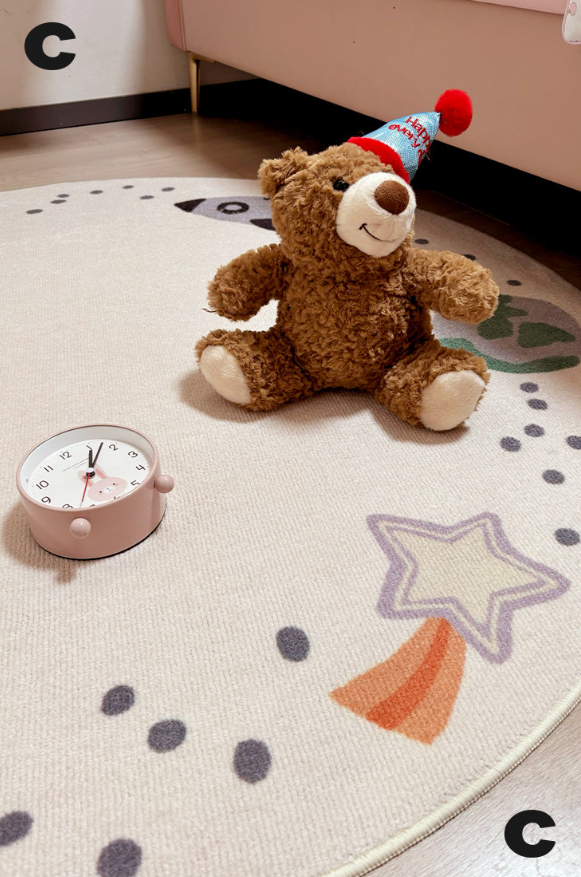
This guide answers both. We cover materials, washability, sizing, safety on Malaysian floors, and how to choose the right rug for each room in your home — nursery, playroom, or bedroom.
The case for a washable kids' rug
A rug in a child's room is not decorative furniture. It is a play surface. It is where your baby does tummy time, where your toddler crashes their cars, where your four-year-old eats a biscuit despite being told not to. It will get dirty — repeatedly, unpredictably, and in ways that a damp cloth cannot fix.
The question is not whether your kids' room rug will need a proper clean. It is whether you will actually be able to give it one.
Most parents who buy a non-washable rug for a child's room find they are either living with a rug they know is not clean, or replacing it within two years. A machine washable rug pays for itself in longevity alone.
The practical benefits are straightforward. Machine washable rugs can be cleaned properly and regularly — not just spot-treated. They dry faster. They do not harbour the bacteria, mould spores, and allergens that accumulate in unwashed pile over time. For a room where a child spends hours on the floor, that matters.
The aesthetic trade-off used to be real. Early washable rugs were functional but flat — limited colours, simple patterns. That has changed significantly. Today's machine washable kids' rugs are designed with the same care as their non-washable counterparts, with a much longer useful life in a household with children.
Rug materials compared
Material is the most important decision after washability — and the two are connected. Some materials wash well, some do not. Some hold up in Malaysia's humid climate, some deteriorate quickly. Here is how the main options compare.
| Material | Machine washable | Softness | Durability | Humidity performance | Best for |
|---|---|---|---|---|---|
| Flat-weave cotton | Yes | Medium | Good | Excellent — dries quickly | Nursery, bedroom |
| Polypropylene | Yes (most) | Medium | Excellent | Excellent — water-resistant | Playroom, high-traffic areas |
| Wool | Rarely | High | Excellent | Poor — slow to dry, mould risk | Low-traffic areas only |
| High-pile synthetic | Sometimes | Very high | Poor | Poor — traps moisture and dust | Not recommended for young children |
| Jute / natural fibre | No | Low | Medium | Poor — absorbs moisture | Adult areas only |
Flat-weave cotton
The most practical all-round choice for a nursery rug or children's bedroom. Flat-weave cotton is soft enough for floor play, washes cleanly at 30–40°C, and dries quickly — essential in Malaysian humidity. It is also free from the synthetic fibres that can irritate sensitive or eczema-prone skin. The low pile height makes vacuuming easy and eliminates the trip hazard of thicker rugs.
Polypropylene
The right material for a dedicated kids' playroom rug or any high-traffic area. Polypropylene is inherently water-resistant, highly stain-resistant, and extremely durable under heavy daily use. Most polypropylene rugs can be wiped clean and many are machine washable. They handle the kind of sustained punishment a playroom produces without fading or deteriorating. Slightly less soft underfoot than cotton, but meaningfully more robust.
Wool
Beautiful, naturally dirt-resistant, and long-lasting — but poorly suited to Malaysia's climate and to rooms with young children. Wool takes a long time to dry completely, which creates a real mould risk in humid homes. Most wool rugs are dry-clean only, ruling out the regular washing that a child's room requires. Best reserved for adult living areas with low foot traffic.
What to avoid in a child's room
High-pile shag rugs are the most common regret purchase in children's rooms. They feel luxurious in a showroom and become a liability at home — they trap crumbs, dust, pet hair, and spilled liquids in a way that surface cleaning cannot reach. They are slow to dry, difficult to vacuum properly, and almost impossible to wash at home. In Malaysia's humidity, a high-pile rug in a child's room is a mould risk. A flat or low-pile washable rug will serve you better in every practical measure.
5 things to check before you buy
Not all rugs labelled "kids" or "washable" are created equal. Before purchasing, run through these five checks.
Confirm it is genuinely machine washable
The word "washable" on a product listing does not always mean machine washable. Some rugs are hand-wash only, which is impractical for a full wash in a family home. Check the care label specifically for machine wash instructions, recommended temperature (usually 30–40°C), and whether it is suitable for a standard front-loading machine. If the listing does not specify, assume hand wash only and look elsewhere.
Check the non-slip backing
Malaysian homes typically have smooth tile, marble, or polished concrete floors. A rug without adequate non-slip backing will slide the moment a child runs across it — and children always run. Look for a rubberised or latex backing that grips smooth surfaces, or plan to purchase a separate non-slip rug pad. This is a safety requirement, not a style preference, particularly in homes with toddlers who do not yet have full balance.
Look at pile height
For a children's bedroom rug or playroom, keep pile height below 1.5cm. Low pile is easier to vacuum, dries faster after washing, resists flattening under furniture, and removes the trip hazard that thicker rugs present to young children still developing their gait. For a baby's nursery where tummy time happens on the floor, a flat-weave or very low-pile rug is the safest and most practical choice.
Check for certifications or low-VOC finishes
Children spend significant time at floor level — crawling, sitting, playing. In air-conditioned Malaysian homes with limited ventilation, the finishes and dyes used in a rug matter. Look for OEKO-TEX Standard 100 certification, which confirms the rug has been tested for harmful substances. Avoid rugs with a strong chemical smell when new, which can indicate high levels of volatile organic compounds off-gassing into your child's breathing zone.
Consider how it dries
In Malaysia's humidity, a rug that takes two days to dry after washing is one you will avoid washing. This is how rugs accumulate months of unseen mess. Choose materials and constructions that dry in a few hours when laid flat — flat-weave cotton and polypropylene are both good on this measure. Avoid tumble drying, which can shrink cotton rugs and damage rubber backing. Always air dry flat, not hung, to prevent distortion.
Choosing by room type
The right kids' rug for a nursery is not the same as the right rug for a playroom. Each room places different demands on the material and the rug's construction.
Nursery rug
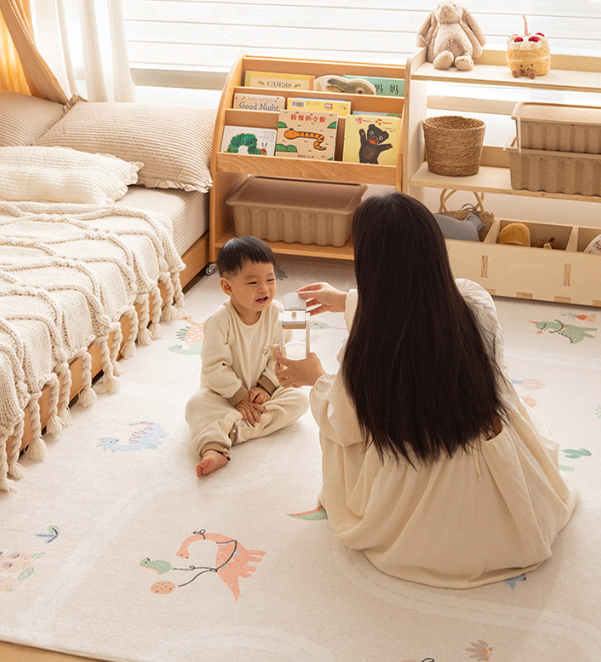
Softness and safety are the priorities. Your baby will spend time directly on this surface — tummy time, rolling, sitting before they can walk. A flat-weave cotton washable nursery rug is the most practical choice: soft against bare skin, easy to wash when nappy accidents happen (and they will), quick to dry, and free from synthetic fibres that can irritate sensitive skin. Keep pile height low. Avoid anything with long fibres a baby could grasp and pull into their mouth.
Playroom rug
Durability and easy cleaning are the priorities here. A kids' playroom rug will face paint, playdough, spilled drinks, crayon, and the concentrated foot traffic of multiple children. Polypropylene handles all of this well and most versions are machine washable or at minimum easy to spot-clean and wipe down. Size the rug generously — the whole play area should sit within the rug's boundary so the floor beneath is protected.
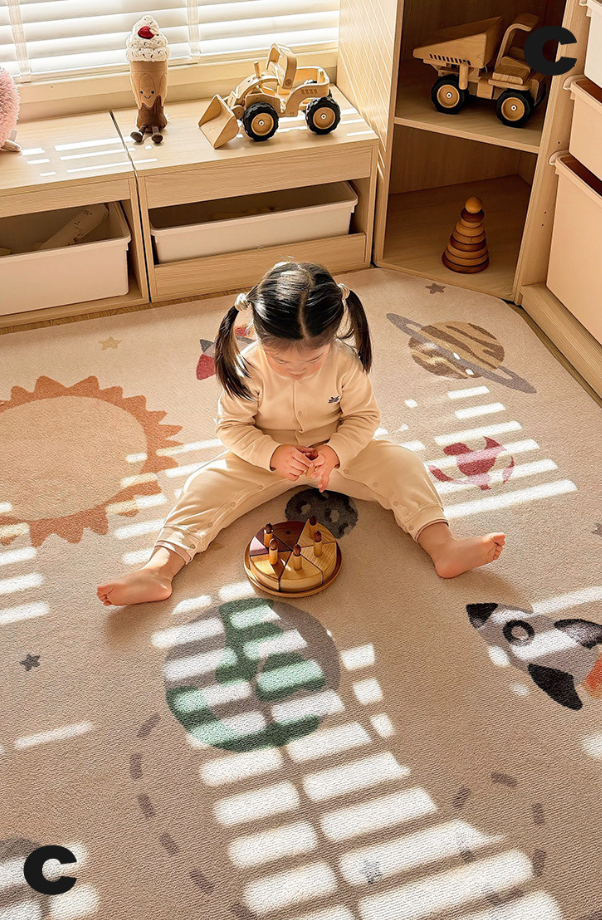
Children's bedroom rug
A children's bedroom rug serves two purposes: it anchors the room visually and provides a soft landing surface beside the bed. Machine washability is still valuable here — bedroom rugs collect dust, skin cells, and the occasional bedtime snack. Flat-weave cotton or a low-pile polypropylene blend both work well. A rug placed beside or partially under the bed also provides a softer, warmer surface for first steps out of bed in the morning — particularly relevant if your child sleeps in a low bunk or floor-accessible bed.
A kids' room rug that extends beyond the footprint of a bunk bed or reading chair creates a defined zone — one the child recognises as theirs. It is one of the simplest ways to give a corner of a shared room a sense of belonging.
Getting the size right
An undersized rug is one of the most common purchasing mistakes in children's rooms. A rug that is too small for the space it is meant to anchor reads as an afterthought rather than a considered part of the room's design — and it does not provide enough coverage for floor play.
| Room use | Recommended size | Placement guide |
|---|---|---|
| Beside a single bed | 120 x 170 cm | Extend at least 60 cm beyond each side of the bed |
| Beside a bunk bed | 120 x 170 cm or 160 x 230 cm | Runs along the open side of the lower bunk |
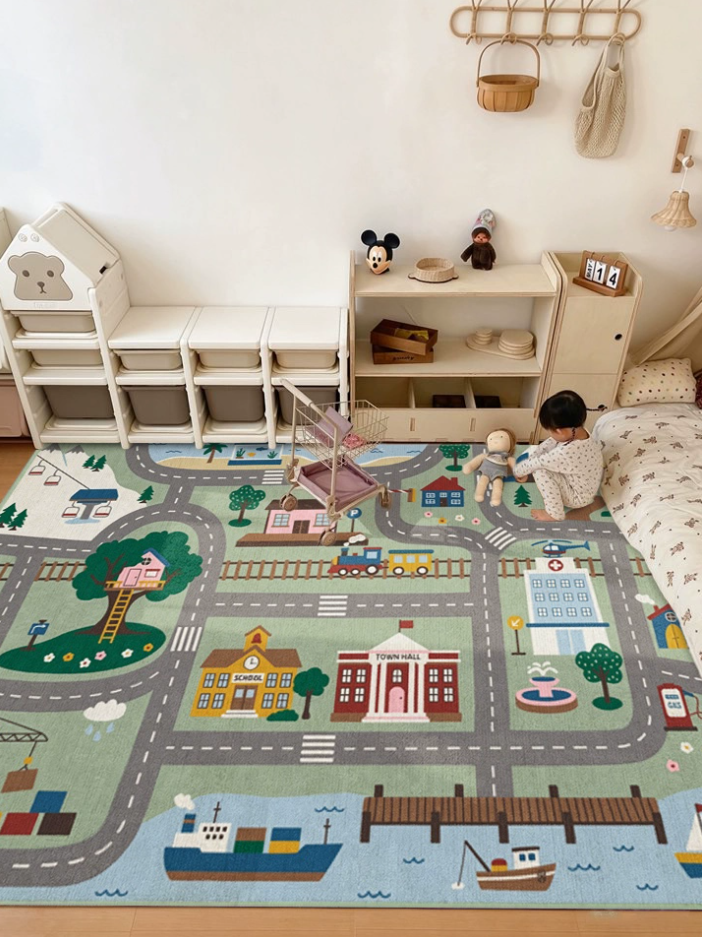
| Playroom zone | 160 x 230 cm or larger | Large enough for child to sit and play fully within boundary |
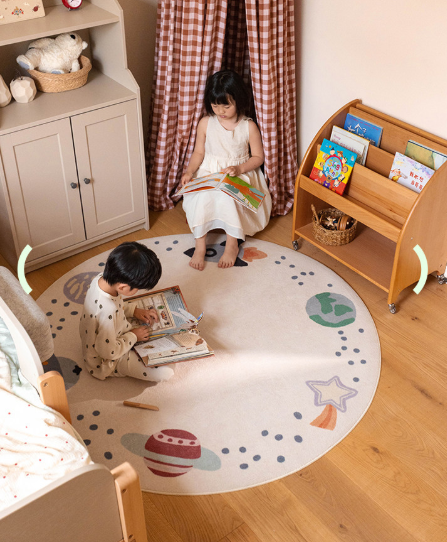
| Reading corner | Round, 100–120 cm diameter | Centred under the reading chair or cushion |
| Nursery | 120 x 170 cm | Centred in the play area, clear of furniture legs where possible |
When in doubt, go larger. A rug that fills more of the room always looks more intentional than one that floats in the middle of an oversized space. For a playroom, covering as much of the floor as practical also protects the flooring beneath from scratches and wear.
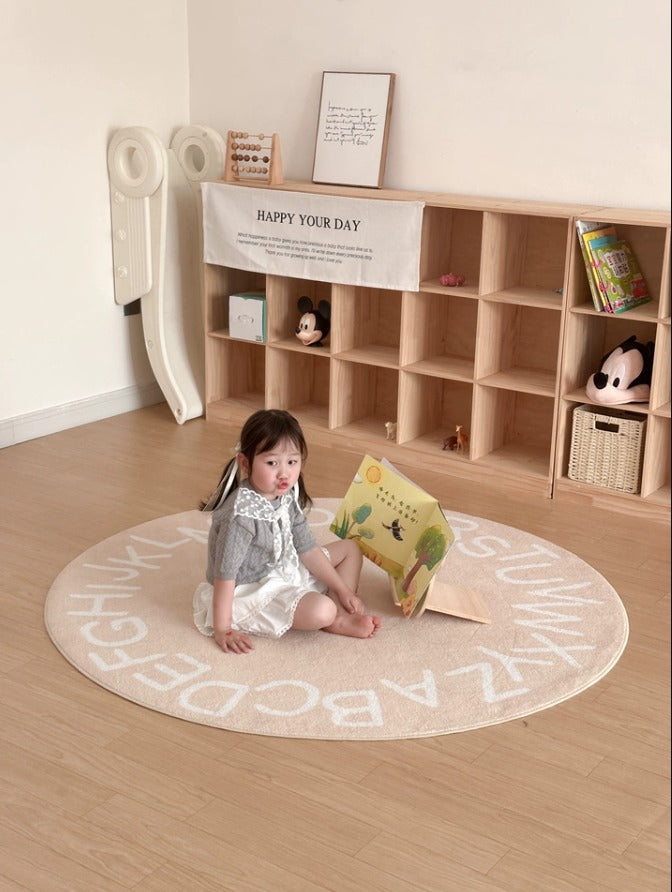
Round rugs
A round kids' rug works particularly well for defining a reading corner, a play area within a larger room, or the space beneath a round table and chairs. The circular shape softens a room visually and creates a natural gathering spot that children gravitate toward. In a small Malaysian apartment bedroom, a round rug in one corner can define a play or reading zone without the room feeling divided.
What's different about Malaysian homes
Choosing a kids' rug in Malaysia involves a few considerations that do not apply in cooler, drier climates.
Humidity and drying time
Malaysia's year-round humidity means rugs dry more slowly than in temperate countries. This matters when choosing a washing routine — a rug that takes two full days to dry will not get washed as often as it should. Flat-weave cotton and polypropylene are the best choices specifically because they shed moisture quickly. Lay flat in a well-ventilated space or under a fan. Avoid laying a damp rug directly back on the floor before it is fully dry, as this traps moisture and creates conditions for mould growth underneath.
Smooth flooring
Most Malaysian homes — particularly apartments and condominiums — have tile, marble, or vinyl flooring throughout. This is practical and hygienic, but it provides very little grip for rugs. Non-slip backing is not optional on smooth Malaysian floors. If your preferred rug does not have adequate backing, a silicone or rubber non-slip rug pad cut to size is a small additional investment that prevents the rug from becoming a hazard when children are running and playing.
Air conditioning and dust
Homes that run air conditioning for significant portions of the day circulate recirculated air — which means dust, allergens, and particles from the floor covering are cycled through the room repeatedly. A rug that is washed regularly reduces the particulate load in the air significantly. This is especially relevant for children with allergies or asthma, and for babies who spend time at floor level where concentration of floor dust is highest.
Frequently asked questions
Are washable kids' rugs worth it?
Yes — for families with babies, toddlers, or young children, a machine washable kids' rug is almost always worth the investment. Children's rugs are magnets for spills, crumbs, paint, and general floor mess. A rug you can put in the washing machine is one you will actually keep clean, rather than one you avoid looking at too closely. The practical benefit outweighs any aesthetic trade-off, especially in a playroom or nursery.
What should I look for in a kids' rug for a Malaysian home?
In Malaysia's humid climate, look for materials that dry quickly and resist mould — flat-weave cotton and polypropylene are both good choices. Machine washability is a practical must for homes with young children. A non-slip backing is important on tile and marble floors, which are common in Malaysian homes. Low pile height makes vacuuming easier and reduces the risk of children tripping. Avoid thick, high-pile rugs in humid rooms as they retain moisture and are harder to dry thoroughly.
Can I put a kids' rug in the washing machine?
Only if it is specifically labelled as machine washable — not all rugs are. Check the care label for washing instructions and maximum load weight. Most machine washable rugs are designed for standard front-loading washing machines at 30–40°C. Always use a gentle cycle. Air dry flat rather than tumble drying, which can cause shrinkage or damage the backing.
What is the best rug material for a nursery or baby's room?
Flat-weave cotton is the most practical choice for a washable nursery rug — it is soft underfoot, machine washable, quick-drying, and free from synthetic fibres that can irritate sensitive skin. Polypropylene is highly durable and better suited to a playroom than a nursery. Avoid high-pile shag rugs in nurseries as they collect dust, are difficult to clean thoroughly, and can be a crawling hazard.
What size rug is best for a child's bedroom in Malaysia?
For a standard Malaysian apartment bedroom, a rug placed beside or partially under the bed — extending at least 60 cm beyond each side — anchors the space well. Common sizes are 120 x 170 cm and 160 x 230 cm. For a dedicated play area, size the rug so your child can sit and play fully within its boundary. Round kids' rugs of 100–120 cm diameter work particularly well for reading corners and activity zones.
Do kids' rugs need a non-slip underlay in Malaysian homes?
Yes — Malaysian homes typically have smooth tile, marble, or vinyl flooring, which offers very little grip. A rug without a non-slip backing or underlay will shift when children run, jump, or play on it. Look for rugs with a rubberised or latex backing, or purchase a separate non-slip rug pad cut to size. This is a safety essential, not an optional extra, particularly in homes with toddlers.